
Your water meter is a free, always-on leak detector — you just have to know how to read it. Turn everything off, watch the low-flow indicator, then close the building shut-off: if the meter keeps moving, the leak is outside the house. In San Luis Obispo the meter sits in a box at the sidewalk; only ever touch your customer valve, never the City's.
This takes about ten minutes and needs no tools beyond a screwdriver to lift the lid. We walk SLO homeowners through this test on the phone all the time — it tells us exactly where to start.
1. Find your meter
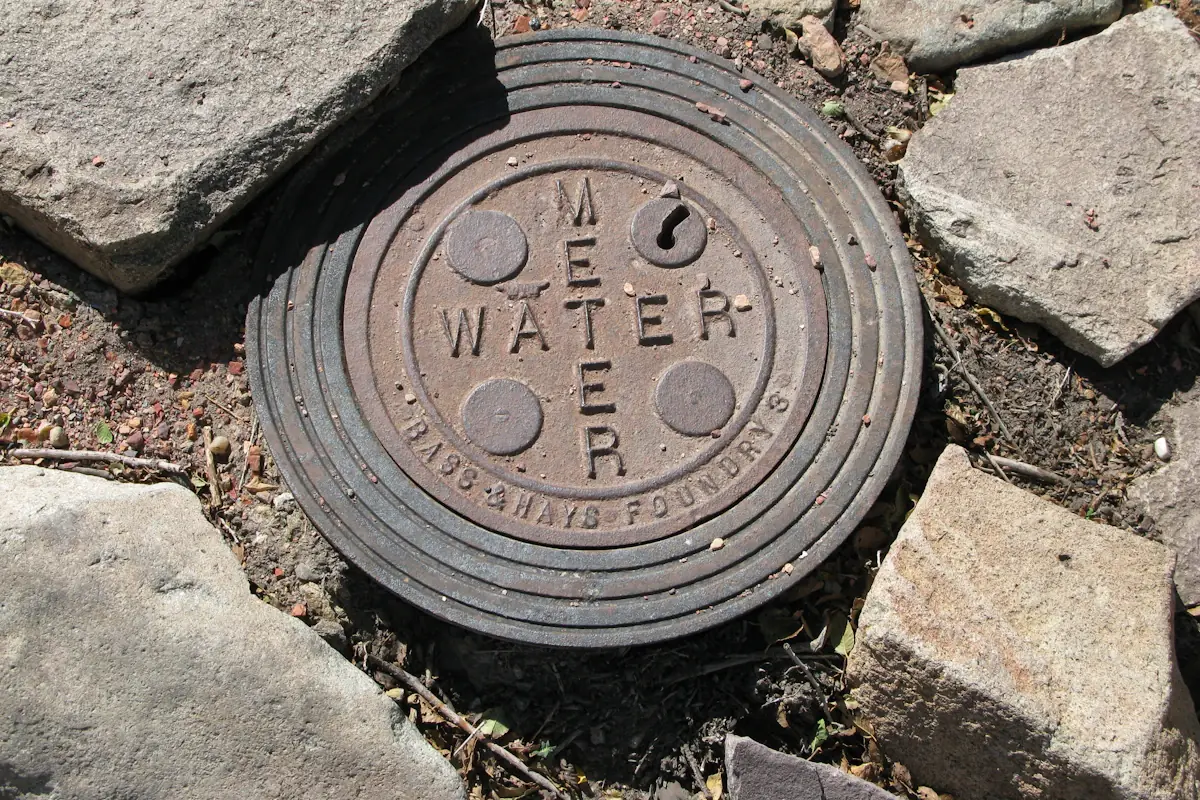
In the City of San Luis Obispo, the meter is generally in a box in the sidewalk in front of the property, not on your private property (City of San Luis Obispo). The lid is usually marked "water" or "meter." Lift it carefully with a screwdriver or meter key; watch for spiders and don't reach in blindly.
2. Get to know what you're looking at
- The register: the numbers that record total water use.
- The low-flow indicator: a small triangle, star, or disc that spins with even a tiny flow. This is the part that reveals leaks.
- Two valves: the City's valve on the street side of the meter, and your customer valve on the property side, closer to the house. Only ever use your customer valve.
Many San Luis Obispo meters now have an AMI radio attached. You can still read the dial, and if you have portal access, your usage graph offers a second view.
3. Turn everything off
Stop all water use: taps, toilets (let tanks finish refilling), dishwasher, washing machine, ice maker, water softener, and every irrigation zone.
4. Watch the low-flow indicator
Watch for a few minutes. If it doesn't move, you don't have a significant active leak. For very slow leaks, photograph the full register reading, avoid using water for one to two hours, and compare. Any change means water is escaping.
5. Close the building shut-off
Close the main valve where the water line enters the house. Then watch the meter again.
- Meter stops: the leak is inside the house.
- Meter keeps moving: the leak is outside, in the service line or irrigation.
This is the method in the City's own Check for a Water Leak guidance.
6. Isolate the irrigation
If your sprinklers are fed from the line outside the house, close the irrigation supply valve (often at the backflow preventer) and check again. If the meter now stops, the leak is in the irrigation. If it's still moving, it's the water service line.
7. Reopen valves slowly
Open valves gradually. Snapping a valve open or shut causes water hammer — a pressure shock that the City notes can damage pipes, particularly after a leak.
What to do with the result
| Result | Where to go next |
|---|---|
| Leak inside the house | Indoor plumbing check: toilets, water heater, fixtures |
| Leak in irrigation | Irrigation repair |
| Leak in service line | Water line leak repair — we pinpoint and fix it |
| Leak at the meter or street side | City of San Luis Obispo Utilities Department |
A service line result means the leak is somewhere on the buried pipe between the meter and your house. Our water service line repair page explains how we pinpoint and fix it, and our overview of water line repair in San Luis Obispo covers ownership and the repair process.
Frequently asked questions
Can I open the meter box myself?
Yes. The box is at the sidewalk and the lid lifts off with a screwdriver or meter key. Just be careful — watch for spiders, don't reach in blindly, and only operate your customer valve on the house side of the meter, never the City's valve.
I can't find my building shut-off valve. Now what?
Look where the water line enters the house — often near a front hose bib, in a garage, or in a crawlspace access. On older SLO homes it can be buried in landscaping or painted over. If you truly can't find it, call us and we'll help you locate it when we come out.
My meter is digital with no spinning dial — how do I check?
Newer AMI meters still show flow on their digital register — look for a flow-rate readout or a leak icon, and check whether the numbers advance with everything off. Your EyeOnWater portal usage graph is the other half of the test: continuous overnight flow is the giveaway.
Should I call the City first or a plumber?
Do the meter test first — it takes ten minutes and answers that question for you. Leak at the meter or on the street side: call the City's Utilities Department. Leak past the meter toward the house: that's yours, and that's our work — call us.