Water Service Line Repair
Repair of the private line between your meter and your house: leaks, failed fittings, cracked sections.
Learn more →
24/7 water line repair · San Luis Obispo, CA
Leaking, broken, or failing water line? We’re WaterFlow Solutions — San Luis Obispo plumbers who find and fix damaged water service lines: the buried pipe between your City meter and your home.
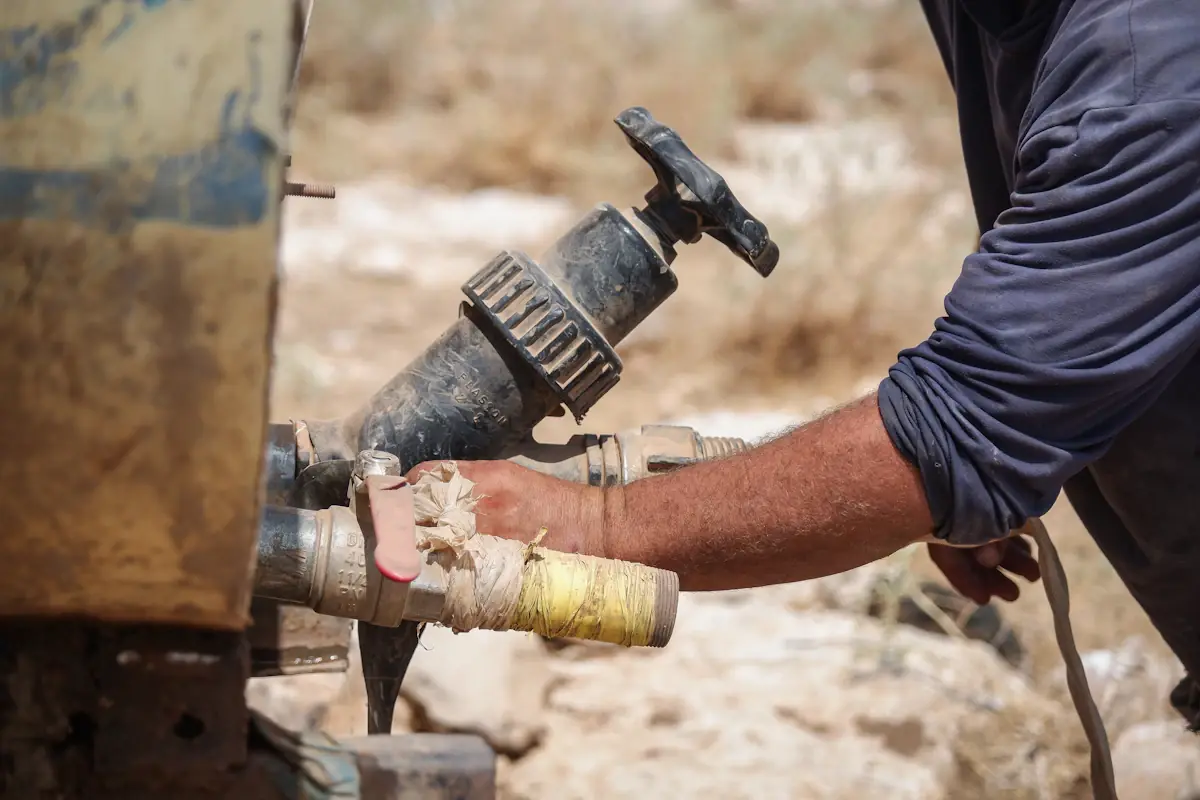
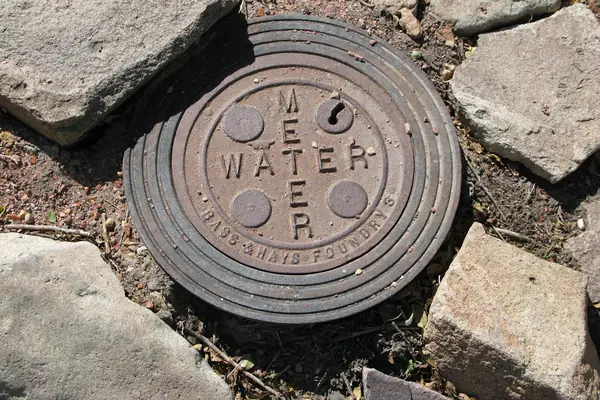
Water line repair fixes leaks, cracks, and breaks in the pressurized pipe that carries drinking water to your property. In San Luis Obispo, that usually means the private service line — the buried pipe running underground from the City-owned meter at the sidewalk to your house, which is the property owner’s responsibility to maintain. We pinpoint the failure, open a targeted access point, replace the damaged section or fitting, pressure-test the line, and restore the ground. If you notice any of the signs below, call (805) 285-4654 — we answer around the clock.
Every property on City water has two pieces of pipe between the street and the kitchen tap. The first belongs to the City: it runs from the water main to the meter box, and San Luis Obispo's Utilities Department operates and maintains it up to and including the meter. The second belongs to you. The city's municipal code calls it the "private service line" — the line that connects the City's meter to the point of entry of your home and, often, your irrigation system.
That private service line is what fails most often, and it's what we work on. Because it's buried, problems tend to show up indirectly: a wet strip of lawn, a pressure drop, a bill that makes no sense. Our work covers finding the leak without guesswork, deciding whether a spot repair or a section replacement makes sense, getting to the pipe with minimal disruption, and leaving you with a line that holds pressure again.
Depending on what you're dealing with, you'll find more specific guidance on our pages for water service line repair, main water line repair, repairing a buried water line and water line leak repair.
Most water line failures announce themselves in one of these six ways. One sign is worth checking; two or more together usually point to the service line.
A lawn strip, planter or path that stays wet, spongy or unusually green between the meter and the house — especially during a dry spell.
Every fixture loses pressure at once, or pressure fades when two fixtures run. A break in the supply line lets water escape before it reaches you.
A jump in usage you can't explain, or a leak notification from the City's smart-meter customer portal (EyeOnWater).
The meter's low-flow indicator keeps turning when nothing in the house or yard is using water.
A constant hiss near the meter box, at the hose bib, or where the line enters the house when everything is shut off.
New depressions in the lawn, a settling walkway, or pavement cracking along the route of the line.
Wet ground and a moving meter together are the classic pattern of an underground water line break. A pressure drop with no visible water often means the leak is draining into gravel or soil — a job for professional leak location.
The City of San Luis Obispo publishes a simple way to tell whether a leak is in your service line or inside your house. It takes a couple of minutes and makes your call to us far more useful.
Method summarized from the City of San Luis Obispo's Check for a Water Leak guidance. Many San Luis Obispo meters now have smart (AMI) radios, and the City's EyeOnWater customer portal lets you set leak notification thresholds — the usage graph can show exactly when a leak started, which helps us diagnose faster.
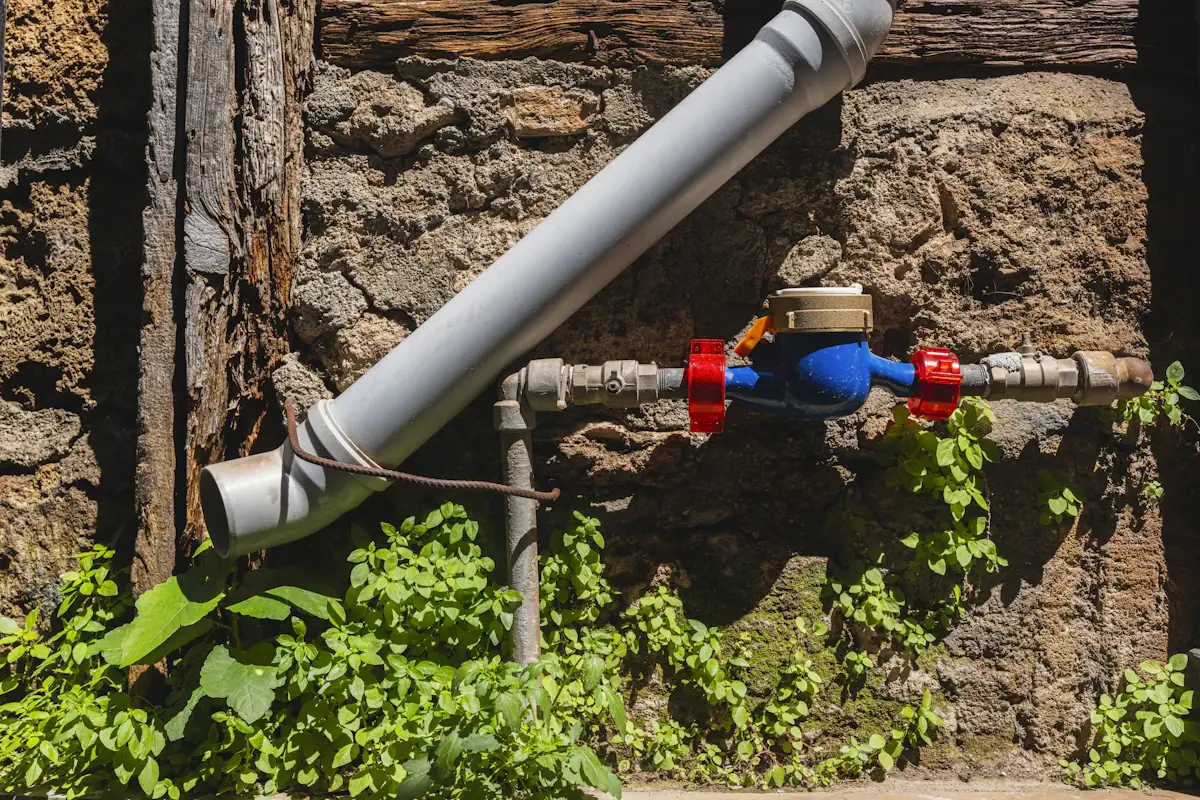
If water is visibly leaking from the meter box fittings or on the street side of the meter, that section is the City's. Contact the City's Utilities Department before calling us.
Four closely related jobs, each with a different starting point. Pick the one that matches what you're dealing with — or just call and describe it.
Repair of the private line between your meter and your house: leaks, failed fittings, cracked sections.
Learn more →Fast help when the whole house loses pressure or the supply fails.
Learn more →Locating a break under lawns, driveways, and hardscape, then repairing it with a targeted dig.
Learn more →Confirming and fixing a hidden leak behind a high bill, a spinning meter, or a City leak alert.
Learn more →If you're not sure which one applies, start with the symptom. Water where it shouldn't be — pooling, soggy soil, a sinkhole — points toward underground water line repair. Numbers that don't add up — a high bill, a spinning meter, a City leak alert — point toward finding and fixing the leak. A house that has suddenly lost pressure or water altogether is usually a main water line problem. And if an inspector or plumber has already told you the service line is damaged, go straight to service line repair.
Water service lines fail for a handful of reasons, and several of them are especially relevant to the local housing stock and ground conditions.
Much of San Luis Obispo's housing was built well before today's plumbing materials. Galvanized steel supply lines, common in older homes, corrode from the inside and rust through at threads and fittings. Copper lasts longer but can pinhole or crack at joints. Some homes built from the late 1970s to the mid-1990s used polybutylene, which is known for failing at fittings. The age of your neighborhood is a reasonable first clue: older areas such as Downtown and Old Town and the 1960s–70s Laguna Lake tracts are more likely to have original lines than newer developments.
Parts of the San Luis Obispo area sit on soils weathered from the Franciscan mélange around the Morros. Local geologists note that some of these clay minerals are highly expansive — swelling when wet and shrinking and cracking when dry (CNPS San Luis Obispo). Seasonal wet–dry cycles move the ground around a buried pipe, stressing joints and fittings over time.
Roots rarely break into a healthy pressurized line, but they do wrap, lift and crush pipes, and they thrive on water from a small existing leak — which makes the leak worse. Fence posts, sprinkler trenches and landscaping projects also strike service lines more often than most people expect.
Water hammer — the shock when a valve closes suddenly — strains older pipe. Poorly supported pipe, mismatched fittings and dissimilar metals joined without a dielectric union also shorten a line's life.
Whatever the cause, the fix starts with the same step: finding exactly where the line has failed. Our leak repair page explains the location methods we use.
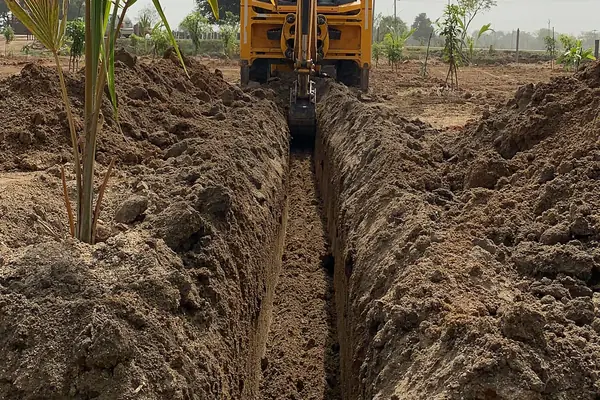
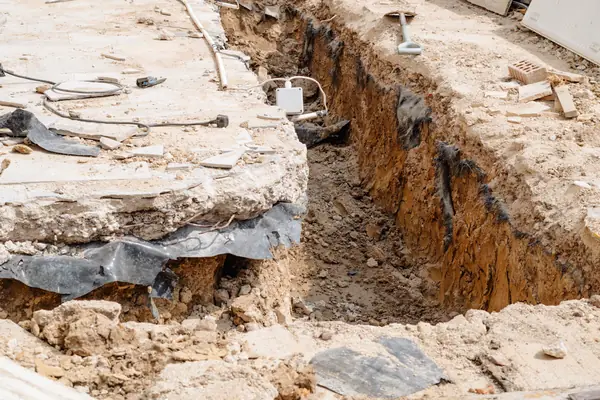
Methods vary by site, but a sound repair follows the same sequence: find the leak, open a small access point, replace the damaged section, test it, and restore the ground.
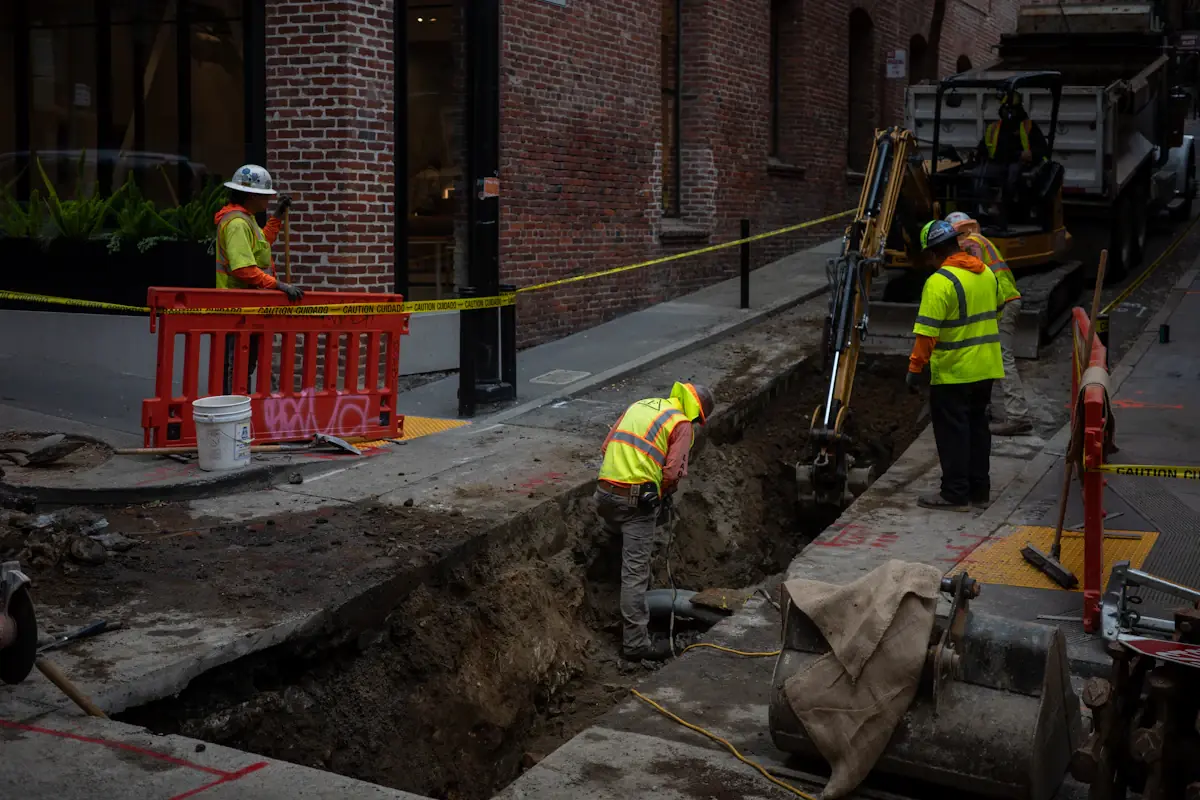
A single failure in an otherwise healthy pipe is a repair. A pipe that is failing everywhere is a replacement, even if only one spot is leaking today. Here's how that decision usually breaks down:
| Situation | Usually points to |
|---|---|
| One leak, pipe in good condition either side | Spot repair of that section |
| Accidental damage (digging, fence post) | Spot repair |
| Second or third leak on the same line | Replacement is worth pricing |
| Heavily corroded galvanized pipe, rusty water | Replacement |
| Polybutylene line failing at fittings | Replacement |
| Pipe too small for the home's needs | Replacement with a larger line |
When we expose the pipe, we'll show you what we found and explain why we recommend one or the other. If replacement is on the table, we'll quote both options so you can compare. It's your decision.
Every job is different. These are the factors that shape what a water line repair involves:
You'll always get a written quote before work starts, listing what's included and what's not.
Here’s exactly what happens when you call — no surprises.
We’re WaterFlow Solutions, based at 3040 McMillan Ave in San Luis Obispo, and water lines are all we do. Before you hire anyone — us included — here’s what’s reasonable to check:
Plain-English answers to the questions San Luis Obispo homeowners ask us about water lines.
Leaks
A sudden jump in your water bill often means a hidden leak. Here's how to rule out the everyday causes and check whether your water line is to blame.
Read the guide →Leaks
Read your meter's low-flow indicator and use your shut-off valves to tell if a leak is in the house, the irrigation or your water service line.
Read the guide →Repair decisions
When a spot repair makes sense, when replacing the whole water service line is better value, and the questions to ask before you decide.
Read the guide →We serve property owners throughout the City of San Luis Obispo. These neighborhood pages explain what's typical for water lines in each part of town.
The section after the meter is. The City maintains the pipe from the water main up to and including the meter; your responsibility starts after the meter and runs to the building. If the leak is on the City's side, call the Utilities Department first.
It comes down to the pipe's condition. One leak in otherwise sound pipe is a repair. Repeated leaks, heavily corroded galvanized pipe, or polybutylene failing at fittings usually point to replacement. We show you what we find when the pipe is exposed and quote both options.
A straightforward spot repair on an accessible line is often finished in a single visit once the leak is located. Hard-to-find leaks, deep pipe, concrete removal, or a full replacement take longer. We'll give you a realistic timeframe after assessing the site.
For part of it, yes. The line has to be shut off while the damaged section is cut out and replaced. We keep the shut-off window as short as practical and restore water as soon as the new section is tested.
That's the goal. We trace the line and pinpoint the leak with acoustic equipment, line tracing, or tracer gas before any digging — so the access hole is as small as possible. We also call 811 to have other utilities marked first.
It depends on your policy. Many standard policies exclude the underground line itself (wear and tear), though some cover resulting damage or offer a service-line endorsement. Check with your agent before work starts, and keep photos and our invoice.
It's one of the most common ways a hidden leak shows up. Run the two-minute meter test above: if the meter moves with everything off and the building valve closed, the leak is between the meter and the house. The City's EyeOnWater portal can also show when the usage started climbing.
It depends on the scope. A small spot repair and a full replacement can be treated differently by the City. We handle the permit side and will tell you upfront if one is needed for your job.
Close the customer valve on the house side of the meter box (don't touch the City's valve on the street side) to stop the flow, then call us at (805) 285-4654. If it's an emergency, we answer 24/7.
Call (805) 285-4654 any time — day or night. Tell us what you’re seeing, and we’ll take it from there: diagnosis, written quote, repair, and restoration, backed by our warranty.