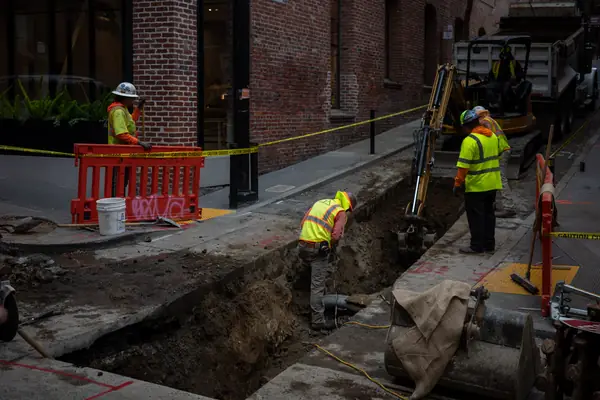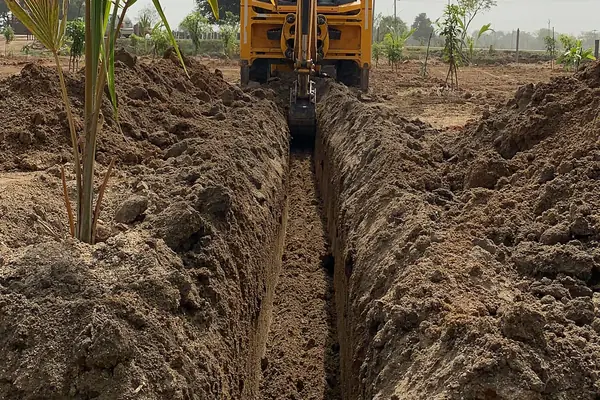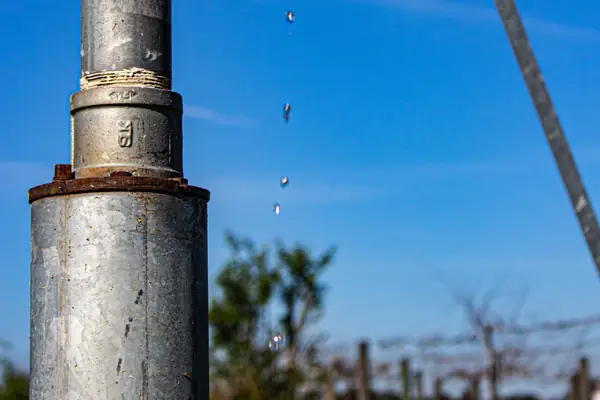
Water service line
What Causes Water Service Line Damage?
Age, corrosion, shifting clay soil, roots, pressure surges and a stray shovel: why water service lines fail, with the San Luis Obispo angle on each.
Read the guide →
Underground water line repair · San Luis Obispo
Wet patches, pooling water or a sinking walkway usually mean a problem you can't see. Our technicians locate buried water line damage and repair it with as little digging as possible.
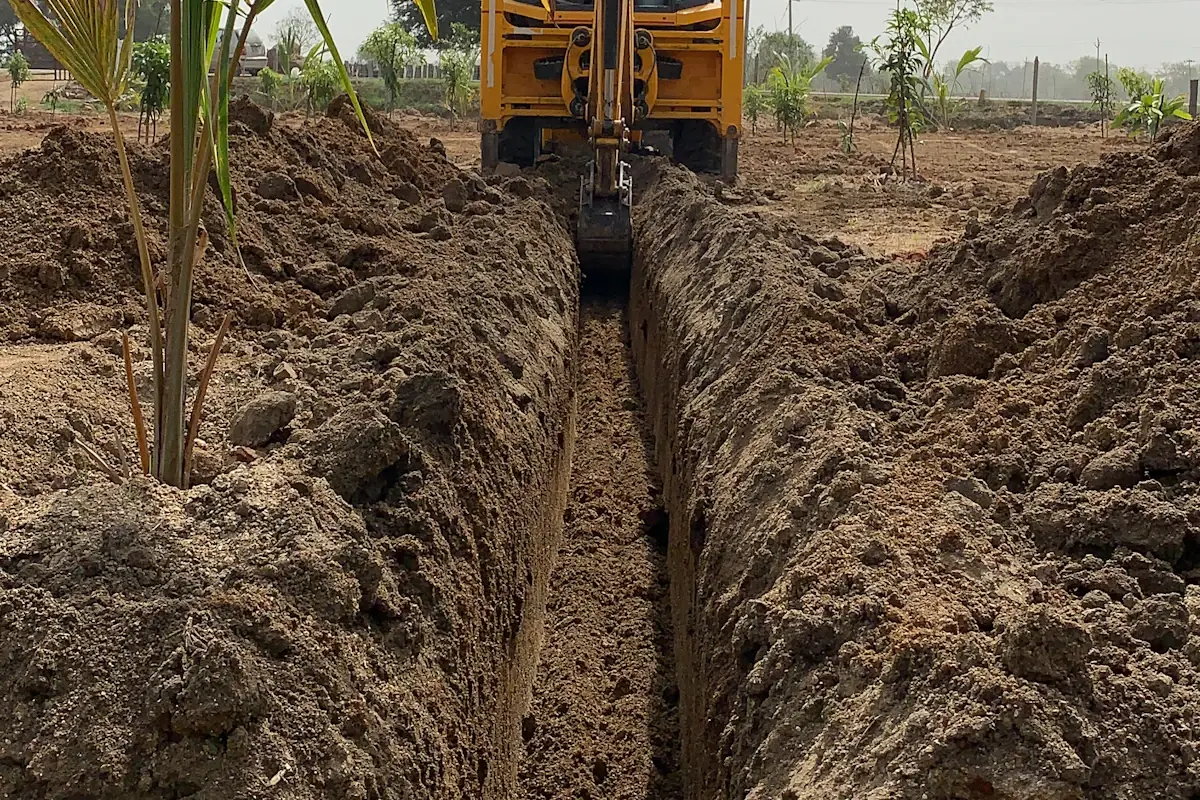
Underground water line repair fixes leaks and breaks in the buried pipe that supplies your property. Because the damage is hidden, the job starts with tracing the line and pinpointing the leak using acoustic, tracer-gas or pressure-testing methods. Water from a buried break follows the path of least resistance through SLO's clay soils, so the wet spot can sit several feet from the actual failure — that's why we locate first and dig second, then open a targeted access point, replace the damaged section, test the line and restore the surface.
With a buried line, the hard part isn't usually the repair itself — it's knowing exactly where to dig. Water from an underground break follows the path of least resistance: along the pipe trench, through gravel, into softer soil. The wet spot you see may be several feet from the actual failure, or water may drain away entirely and leave no surface sign at all. Good underground water line repair is mostly about locating first and digging second.
Ground that stays damp between the meter and house during dry weather, or turf that squelches underfoot.
Water collecting in a low spot, bubbling up through a joint in the walkway, or seeping from a slope.
A new depression in the lawn or a walkway section that has dropped — soil washed away by escaping water.
A stripe of greener, faster-growing grass or weeds along the line's route during the dry months.
A bill that jumps or a City leak alert with no indoor cause.
Pressure that drops or fluctuates as more water escapes through the break.
Before anyone digs, we need two things: the pipe's route and the leak's position along it.
We'll tell you how we plan to find your leak before we agree on excavation — ask us; it's a reasonable question.
Once the leak is pinpointed, we plan the dig around what's in the ground and what's on top of it:
Under lawns and landscaping, we open a targeted access hole, repair the pipe, and compact the soil back in layers. Ask whether sod or plant replacement is included in your quote. Under walkways and driveways, the choice is between cutting through the surface to reach the leak or rerouting a new section of pipe around it. For full replacements, trenchless methods — pulling a new pipe through the old path or boring under the obstacle — can reduce surface disruption where soil and site conditions allow.
Once the repair is done, we pressure-test the line with the trench still open, so any problem is visible before backfilling.
We handle this work throughout the city, as part of our broader water line repair in San Luis Obispo. Conditions vary block to block: mature trees and established landscaping around Laguna Lake, tighter lots and older pipe in Downtown and Old Town, and sloped hillside lots near Bishop Peak. If you're confident the problem is buried but not yet sure it's a leak rather than a full break, see water line leak repair; if the entire house has lost pressure, see main water line repair.
A few minutes of observation before your call can save time on site.
Close the building valve and irrigation, then watch the meter. See the City's method.
Put a stake or flag where the ground is wettest and note if it moves day to day.
Note where your sewer cleanout, sprinkler valves and lighting run, if you know.
Keep cars off driveways and paths that have started to sink.
Background reading before you call.
Water service line
Age, corrosion, shifting clay soil, roots, pressure surges and a stray shovel: why water service lines fail, with the San Luis Obispo angle on each.
Read the guide →Water service line
Many service line spot repairs take one visit, but leak location, depth, pipe material and what's on top of the pipe can stretch the timeline.
Read the guide →Leaks
Soggy lawn, puddles in dry weather, sinkholes, a greener strip of grass or a meter that won't stop: how to recognize a leak you can't see.
Read the guide →Here's exactly how it works when you call us.
Common causes are a leaking irrigation line or valve, a broken water service line, or a leaking hose bib. If the meter keeps moving with the building valve and irrigation shut off, the buried service line is the likely source — call us and we'll confirm which one it is.
Yes. Escaping water can carry soil away from around the pipe, leaving a void that eventually collapses into a depression. Keep people and vehicles off sunken areas and have the line checked.
Depth varies by age, installer and site. Residential service lines are often a foot or two below grade, but older or rerouted lines may be shallower or deeper. We'll confirm on site before we dig.
A repair almost always needs access to the damaged spot, but good leak location keeps that access small — often a single targeted hole. Trenchless methods are mainly used for replacing a full line rather than fixing a single leak.
It depends on the job. Trenchless makes sense for a full line replacement under driveways, patios, or mature landscaping you want to keep intact. For a single located leak, a small targeted dig is usually simpler and faster. We'll recommend the right method for your site after we see it.
Not long. Even a modest leak wastes water around the clock, raises your bill, and can undermine walkways, driveways and foundations — especially in SLO's shrink-swell clay soils.
That's listed in your written quote. We always backfill and compact properly; sod, concrete patching, or paver resetting can be included — ask us to put restoration in writing before work starts.
Call (805) 285-4654 and describe what you're seeing. We answer 24/7 — free to call, no obligation. We'll locate the problem and give you a written quote before any work starts.