
Most leaking service lines can be repaired — the real question is whether they should be. One leak in otherwise sound pipe is a repair; repeat leaks, heavy corrosion, or polybutylene lines in San Luis Obispo's older neighborhoods usually mean replacement is the smarter move. We'll show you the exposed pipe and walk through both options before you decide anything.
A useful way to think about it: a repair fixes a leak; a replacement fixes a pipe. If the leak is the only thing wrong, repair it. If the leak is a symptom of a pipe that's wearing out, you'll be back for another repair before long. We see both situations every week across SLO, and we're straight with homeowners about which one they're in.
Can a Water Service Line Be Repaired or Does It Need Replacement?
It comes down to what the rest of the pipe looks like once it's exposed. A single failure in healthy pipe is a repair job. A pipe that is failing in multiple places is a replacement candidate, even if only one spot is leaking today.
When a repair is the right call
- A single leak or break, with sound pipe on either side.
- Accidental damage from digging, a fence post, or landscaping.
- A failed coupling or fitting on an otherwise healthy line.
- Relatively modern pipe material in good condition.
When replacement deserves a serious look
- Repeat leaks on the same line. A second or third failure is the classic sign the pipe is done.
- Heavily corroded galvanized pipe, often with rusty water or gradually falling pressure. We see this a lot in SLO's pre-1970s homes.
- Polybutylene (usually gray plastic), used in some homes from the late 1970s to the mid-1990s and known for failing at fittings.
- An undersized line for a home that has added bathrooms, an accessory unit, or other demand.
- Multiple patches of different materials along the route — a sign of a line that's been limping along.
The key moment: when the pipe is exposed
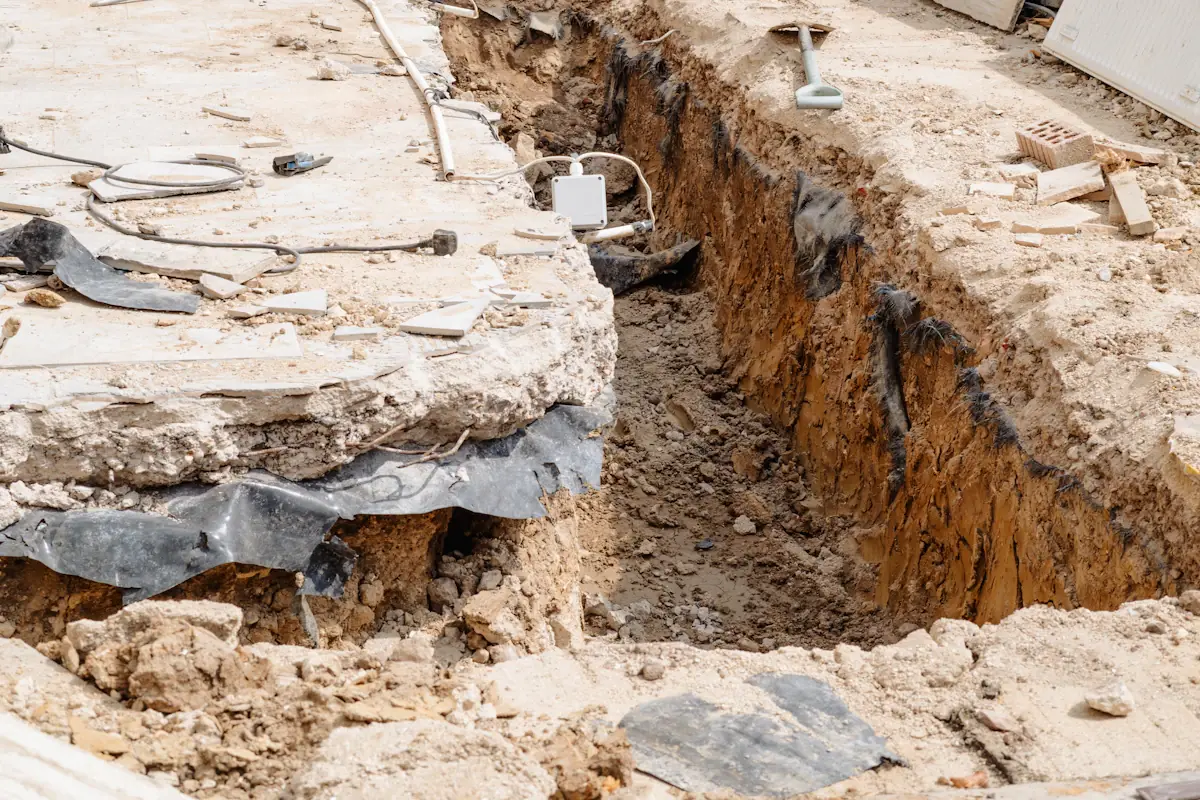
Until anyone digs, everyone is estimating. Once we expose the pipe at the leak, its condition is visible: clean copper, pitted galvanized, brittle plastic. We show it to you — or send photos — because that's the evidence the decision should rest on, not a guess from the surface.
Comparing the two
| Spot repair | Replacement | |
|---|---|---|
| Scope | One damaged section | The whole run from meter to house |
| Disruption | One access hole | Trench or trenchless method, more work |
| Job size | Smaller | Larger |
| Future leaks | Depends on the rest of the pipe | Resets the clock with new pipe |
| Best for | Isolated damage, sound pipe | Aging, corroded, or repeatedly failing pipe |
About trenchless replacement
For full replacements, we can often pull new pipe through the old path or bore underneath obstacles, which reduces disruption to lawns, paths, and driveways where site conditions allow. SLO's clay soils and tight side yards make trenchless attractive on many lots — we'll tell you honestly whether your property is a candidate.
Questions to ask your plumber
Whoever does the work — us or someone else — these are the questions that matter:
- What condition is the pipe in on either side of the leak?
- What material is it, and roughly how old?
- What does the repair involve versus the replacement, and what does each include for surface restoration and permits?
- Can I see the exposed pipe or get photos before deciding?
- What warranty applies to each option?
We answer all five on every job, in writing, before any work starts.
Our water service line repair page compares repair outlook by pipe material, and main water line repair covers failures near the house entry. For ownership rules in the city, see our overview of water line repair in San Luis Obispo.
Frequently asked questions
Should I replace my polybutylene line before it fails?
If your home was built between the late 1970s and mid-1990s and still has its original gray polybutylene service line, yes — it's worth planning a replacement on your schedule rather than waiting for a burst. The material is known for failing at fittings with little warning.
Will a spot repair fix my low pressure?
Only if the low pressure is caused by the leak itself. If pressure has been fading gradually for months, the line may be corroding shut from the inside — a replacement, not a patch, is usually the answer. We'll check pressure and flow before recommending either.
Can you go trenchless under my driveway?
Often, yes. Pipe bursting and boring let us replace a line with minimal surface damage. It depends on soil conditions, depth, and what's already in the ground — we'll confirm with a site look before promising it.
How do I know I'm not being oversold on a replacement?
Ask to see the pipe. A reputable plumber will show you the exposed section and explain what they're seeing. If the pipe on both sides of the leak is clean and sound, a repair is the honest recommendation — and that's what we'll tell you.
Do your repairs come with a warranty?
Yes. Every repair and replacement we do is backed by our warranty on labor and materials, spelled out in your written quote before work begins.