
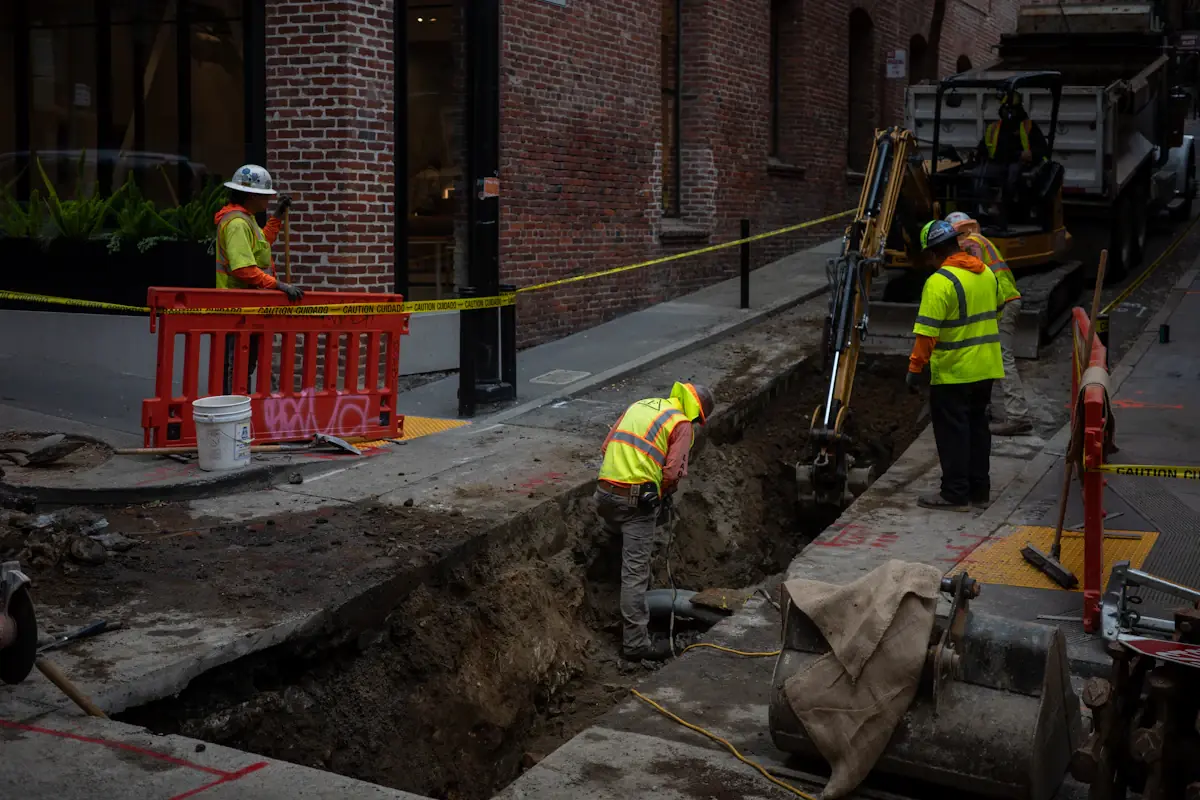
A single, easy-to-find leak under lawn is often fixed in one visit. What stretches the timeline is finding a hidden leak, saw-cutting through concrete, a deep or hard-to-reach line, or a full replacement instead of a repair. In our experience, the locating step can genuinely take longer than the repair itself.
The five factors that set the timeline
1. How easy the leak is to find
If water is bubbling up in one obvious spot, locating is quick. A silent leak draining into gravel is different: we may need to trace the pipe's route and use acoustic equipment or tracer gas to pinpoint it. Our guide to finding underground leaks explains why.
2. What's on top of the pipe
Lawn and planting beds are quick to open and close. Pavers can be lifted and relaid. Concrete and asphalt need saw-cutting and patching, and new concrete needs time to cure before it can take traffic — which can add days to the overall job even if the plumbing part is quick.
3. Depth and access
A shallow line in an open front yard is a small dig. A deeper line, a narrow side yard, a slope, or other utilities crossing nearby all slow careful excavation.
4. Pipe material
Joining new pipe to sound copper or plastic is straightforward. Old galvanized steel can crumble when disturbed, which sometimes turns a short repair into a longer one as we replace more pipe to reach solid material.
5. Extent of damage
One leak is one repair. Several leaks, or a line that's failing along its length, point toward replacement — a bigger job. Our repair-or-replace guide walks through that decision.
Typical scenarios
| Scenario | What to expect |
|---|---|
| Visible leak under lawn, sound pipe | Often completed in a single visit |
| Hidden leak needing location equipment | Locating may be a separate step before the repair |
| Leak under a concrete driveway or path | Repair plus concrete work; surface restoration may take longer |
| Full service line replacement | A larger job; we'll give you a schedule up front |
| Permit required for the work | May add inspection scheduling |
How long will the water be off?
Usually for less time than the whole job. The water has to be shut off while the damaged section is cut out and replaced, but locating and digging typically happen with the water still on (or turned on between steps). We warn you before the shut-off so you can fill a few containers.
Ways to speed things up
- Run the meter test before you call, so we know it's an outside leak when we arrive.
- Mark any wet spots and tell us where sprinkler lines, lighting, and your sewer cleanout run.
- Clear vehicles, planters, and furniture from the likely work area.
- Ask up front whether a permit is needed and whether surface restoration is included — we cover both in our written quote.
Our water service line repair page walks through each stage of the job, and our homepage covers water line repair services in San Luis Obispo more broadly. If you want to know exactly what happens on the day, read what happens during a water service line repair.
How long will my water be off during the repair?
Less time than the job takes overall. Locating and digging usually happen with the water on; it's only off while we cut out and replace the damaged section. We give you a heads-up before the shut-off.
Do I need to be home during the repair?
It's helpful to be reachable for the assessment and the shut-off, but you don't need to watch the whole job. We walk you through what we'll do, give you a written quote, and keep you posted.
Do you need a permit for water line repair in SLO?
Sometimes — it depends on the scope and where the work happens. We handle the permit side and coordinate any required inspections, and we tell you up front if one applies to your job.
Can you come out the same day I call?
We answer 24/7, and for active leaks or breaks we prioritize getting someone out quickly. Call (805) 285-4654 and tell us what you're seeing — we'll give you a realistic arrival window.
What slows a water line job down the most?
Finding a hidden leak and dealing with concrete or asphalt on top of the pipe. The plumbing repair itself is usually the quick part — it's location and access that set the schedule.