
- The meter test narrows the leak to the house, irrigation or service line.
- Visual clues help, but water often surfaces away from the leak.
- Professionals pinpoint with acoustic, tracer-gas and pressure methods.
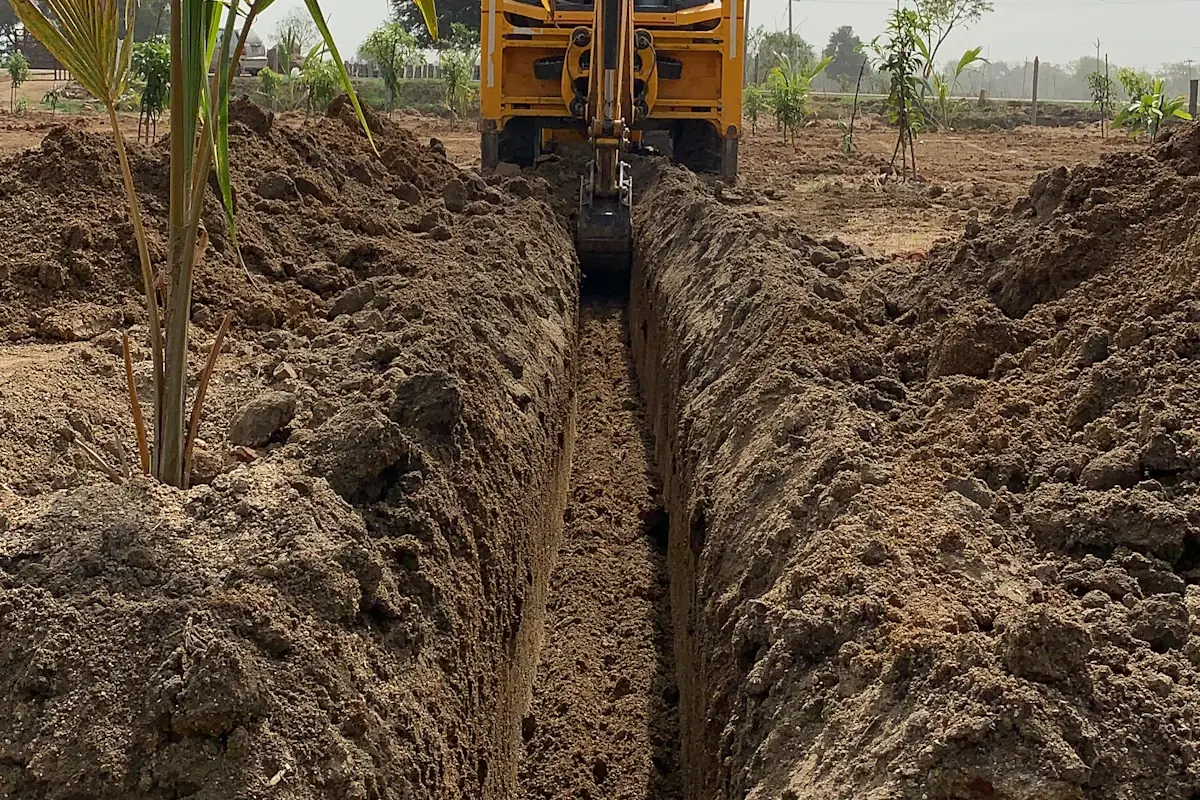
Digging is the expensive, disruptive part of any underground repair, so the whole goal of leak location is to dig once, in the right place. Here's the funnel.
Stage 1: Which system? (you can do this)
Use the meter. With all water use off, a moving low-flow indicator confirms a leak. Close the building shut-off: if the meter keeps moving, it's outside. Close the irrigation supply: if it still moves, it's the water service line. The City of San Luis Obispo describes the first part of this in its leak guidance, and our meter check guide covers the full sequence.
Stage 2: Where along the route? (visual clues)
Walk from the meter toward the house. Look for damp soil, greener grass, soft or sunken areas, and listen at the meter box and hose bibs for hissing. Useful, but treat the clues with caution: water follows the loose backfill of the old trench and may surface well away from the actual leak, especially on sloped lots.
Stage 3: Pinpointing (professional equipment)
Line tracing
First the provider needs the pipe's exact route. Metal pipe can be traced electronically. Plastic pipe can't carry a signal on its own, so providers use a tracer wire if one was installed, insert a transmitter, or work from known points like the meter and the house connection.
Acoustic leak detection
Water escaping a pressurized pipe makes noise. Ground microphones placed at intervals along the route amplify that sound, and the loudest point marks the leak. It works best on metal pipe, where sound carries well, and in quiet conditions.
Tracer gas
For plastic pipe, or when acoustics are unclear, the line is drained and filled with a safe tracer gas that escapes through the leak and rises through the soil, where a sensitive detector picks it up at the surface.
Pressure testing
Isolating sections of the system and watching whether they hold pressure confirms which section is leaking. It's especially useful where a line has branches (for example irrigation tees) or multiple suspected problems.
Why methods vary
| Condition | Effect on leak location |
|---|---|
| Metal pipe (copper, galvanized) | Carries sound well; acoustic methods effective |
| Plastic pipe (PVC, PE, PEX) | Dampens sound; tracer gas often better |
| Deep pipe or dense clay | Weaker signals; may need more testing |
| Traffic or machinery nearby | Background noise interferes with listening |
Not every provider uses every tool, so it's reasonable to ask how they plan to find the leak before agreeing to excavate. Once it's pinpointed, underground water line repair is a targeted dig and a section repair; see water line leak repair for the full process, or our overview of local water line repair in San Luis Obispo.