
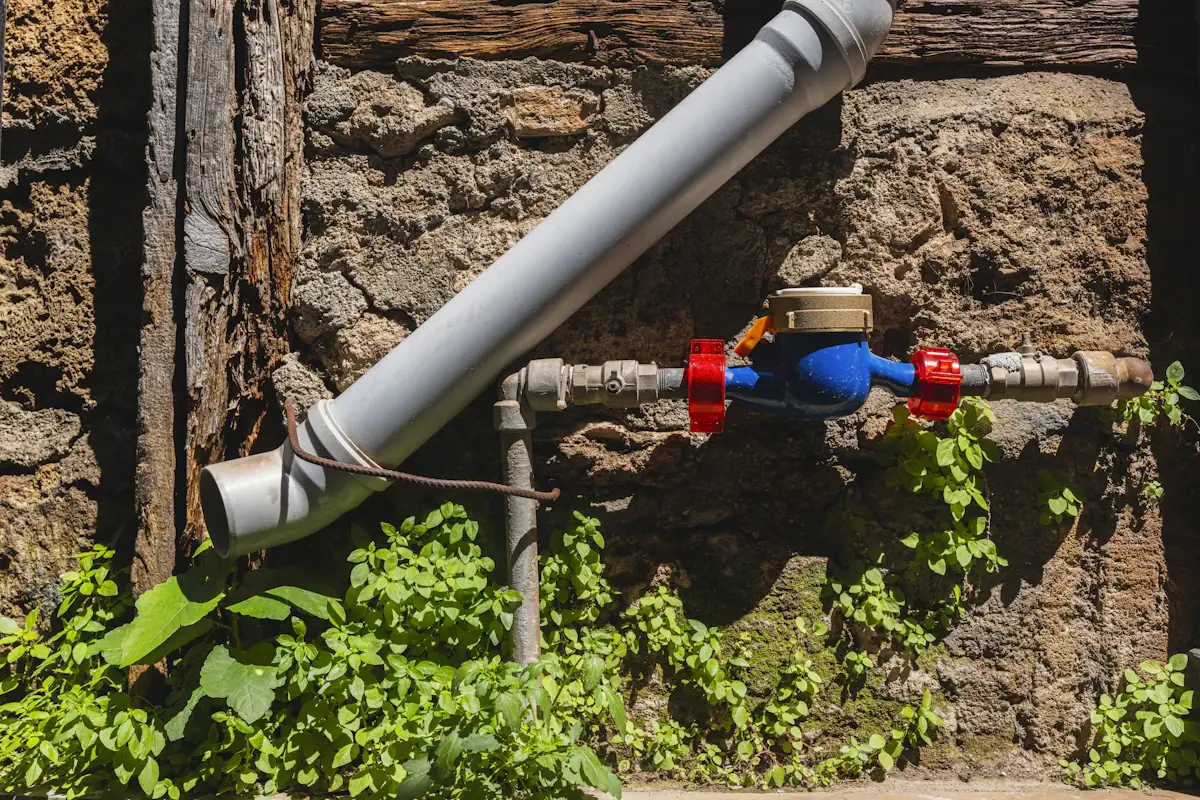
If your meter test says the leak is "between the meter and the house," you now know three things: it's the private service line, it's the property owner's responsibility in San Luis Obispo — not the City's — and the repair is usually a targeted dig and section replacement. This is core work for us; we do it across SLO every week.
Which pipe it is
The pipe between your meter and your home is the water service line. San Luis Obispo's municipal code calls it the private service line: the line that connects the City's water meter to the point of entry of a parcel's dwelling and/or irrigation system. On most lots it's a single buried pipe, often ¾ inch or 1 inch, sometimes with an irrigation branch.
Whose responsibility it is
The City of San Luis Obispo operates and maintains the pipe from the water main up to and including the meter. The customer's responsibility begins after the meter and covers all the pipe running toward the building (City of San Luis Obispo). So a leak between the meter and the house is a private repair, arranged and paid for by the property owner — and it's the work we do.
Exception: if water is leaking at the meter itself, its fittings, or the street side of the meter, that equipment is the City's. Contact the City's Utilities Department first — don't pay a plumber for the City's pipe.
How sure is the diagnosis?
If you closed the building shut-off and the meter kept moving, the leak is outside the house. If you also closed the irrigation supply and it still moved, it's on the service line itself. If you didn't isolate irrigation, it could still be a sprinkler leak — our meter check guide shows how to separate the two.
What usually causes it
Age and corrosion (particularly galvanized pipe), failed fittings where materials change, shifting clay soil, root pressure, and accidental digging damage are the common culprits in SLO. Our article on what causes service line damage explains each.
What the repair involves
- We trace the pipe and pinpoint the leak with listening equipment or pressure testing.
- We call 811 and open a small access hole over the damage after utilities are marked.
- We replace the damaged section or fitting.
- We pressure-test the line, flush it, and backfill.
If the pipe turns out to be failing along its length, we may suggest replacement instead of another patch — see repair or replace? for how that decision works.
What affects the scope of the job
How easily the leak is found, how deep the pipe is, what's on top of it (lawn versus concrete), the pipe material, the length of pipe involved, and whether permits and surface restoration are included. Our written quote lists exactly what's included — and what's excluded — so there are no surprises.
Should you wait?
No. A leak on the service line runs continuously, raising your bill and saturating soil that can undermine paths, driveways, and foundations. If it's large, shut off your customer valve between uses until we get there.
Next steps: water service line repair explains the job in detail, and water line leak repair covers leak location. For the bigger picture, see water line repair in San Luis Obispo, CA.
Frequently asked questions
The City sent me a repair notice — what do I do?
Don't ignore it — these notices typically come with a deadline to fix the leak. Call us right away: we'll confirm the leak's location, handle the repair, and you'll have the documentation you need to show the City the work is done.
Is there a way to tell if the leak is before the meter?
Watch where the water surfaces. Water weeping from the meter box on the street side, or surfacing between the street and the meter, points to the City's section — call the City's Utilities Department. Water between the meter and your house, with the meter moving, is your service line — call us.
Does homeowners insurance cover a service line leak?
Usually not for the pipe itself — most standard policies exclude wear and tear, which is what causes most service line failures. Some policies offer a service-line rider, and sudden accidental damage is treated differently from gradual deterioration. Check your policy's wording; we can document the cause and the repair for your claim either way.
Can I wait a few months to fix it?
We don't recommend it. The leak runs around the clock — the bill keeps climbing and the soil keeps saturating. Small leaks become undermined driveways and cracked walkways. The repair doesn't get cheaper with time; the collateral damage gets more expensive.