
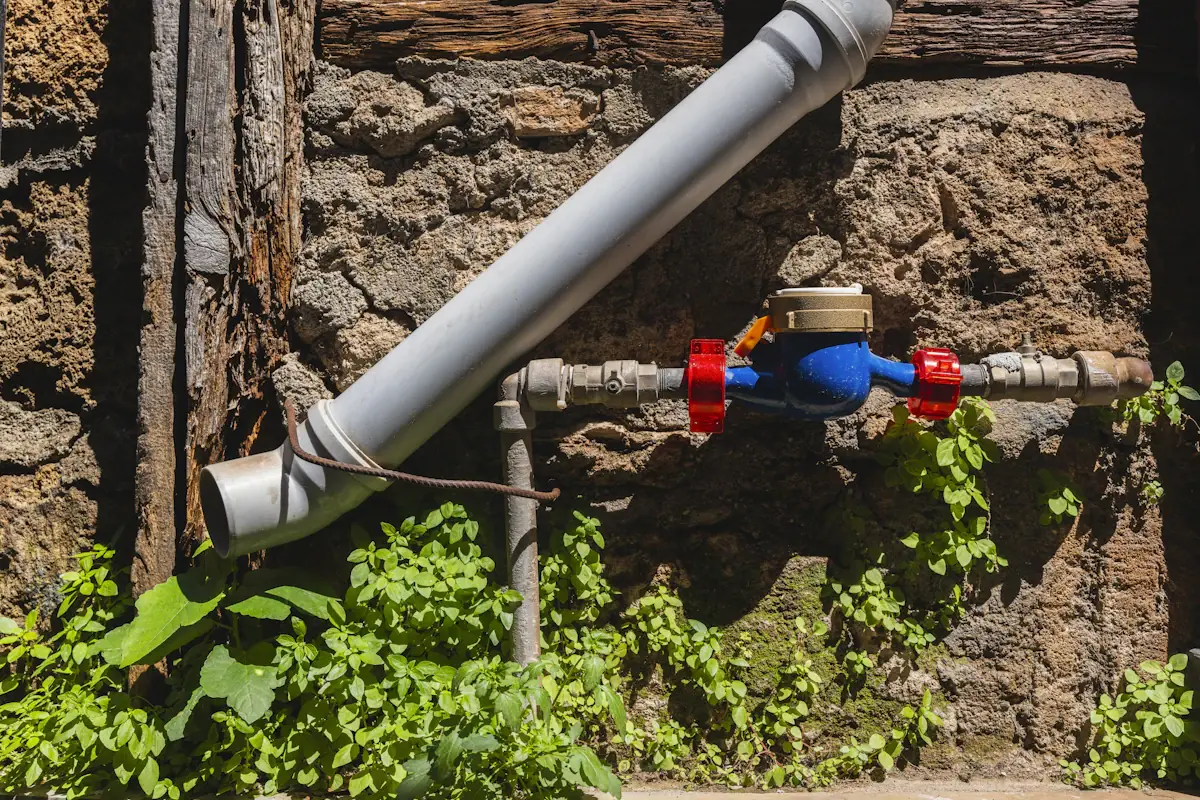
- Isolate the house, then the irrigation, then read the meter each time.
- A meter still moving with both isolated points to the service line.
- Leaks at the meter itself or on the street side are the City's to fix.
"Is it leaking?" is only half the question. Every property on City water has three places a leak can hide: inside the building, in the irrigation system, and in the buried service line that connects the two to the meter. Each has a different fix and a different person to call, so narrowing it down first saves time and money.
What you need
- Access to your meter box (usually at the sidewalk; the lid lifts off).
- Your main building shut-off, often near a front hose bib or where the pipe enters the house.
- Your irrigation shut-off or backflow valve, if you have in-ground sprinklers.
- A phone to take photos of the meter reading.
Step 1: Confirm something is leaking
Turn off every tap, toilet, appliance and irrigation zone. Look at the meter's low-flow indicator (a small triangle, star or dial). If it's still, and stays still for several minutes, you probably don't have an active leak. If it's moving, carry on. For a slow leak, write down the full reading, avoid using water for an hour or two, and compare; any change means water is going somewhere.
Step 2: Close the building shut-off
This separates the house from everything outside. If the meter stops, the leak is inside: a running toilet, a water heater relief valve, a hidden pipe. If the meter keeps moving, the leak is between the meter and the building. This is the check the City of San Luis Obispo recommends in its leak guidance.
Step 3: Isolate the irrigation
Many homes branch the irrigation supply off the service line outside the house, so a moving meter at Step 2 could still be a sprinkler problem. Close the irrigation supply valve and watch the meter again.
- Meter stops: the leak is in the irrigation system.
- Meter keeps moving: the leak is in the water service line itself.
Step 4: Look and listen along the route
With the house and irrigation isolated, walk the likely path of the pipe from the meter to the house. Look for damp soil, unusually green grass, a soft spot or water weeping at the meter box on the house side. Listen at the meter box and at the hose bib for hissing. You won't always find the exact spot, but anything you notice helps the provider.
When it isn't your leak
If water is coming from the meter itself, its fittings, or the street side of the meter, that equipment belongs to the City. The City maintains the pipe up to and including the meter, so contact the City's Utilities Department before hiring a private plumber.
What the results tell you
| Result | Leak is in | Next step |
|---|---|---|
| Stops at Step 2 | The house | Indoor plumbing check |
| Stops at Step 3 | Irrigation | Irrigation repair |
| Still moving after Step 3 | Service line | Water line leak repair |
Why a professional still needs to pinpoint it
Knowing the leak is "somewhere in the service line" narrows it to one pipe, but that pipe may run 30, 50 or more feet under lawn, paths and driveway. Providers use acoustic listening equipment, tracer gas or pressure testing to find the exact spot so the access hole is small. Our guide on how underground leaks are found explains those methods, and our service line repair page covers what happens next. For a wider view, start with our overview of water line repair in San Luis Obispo.